
en
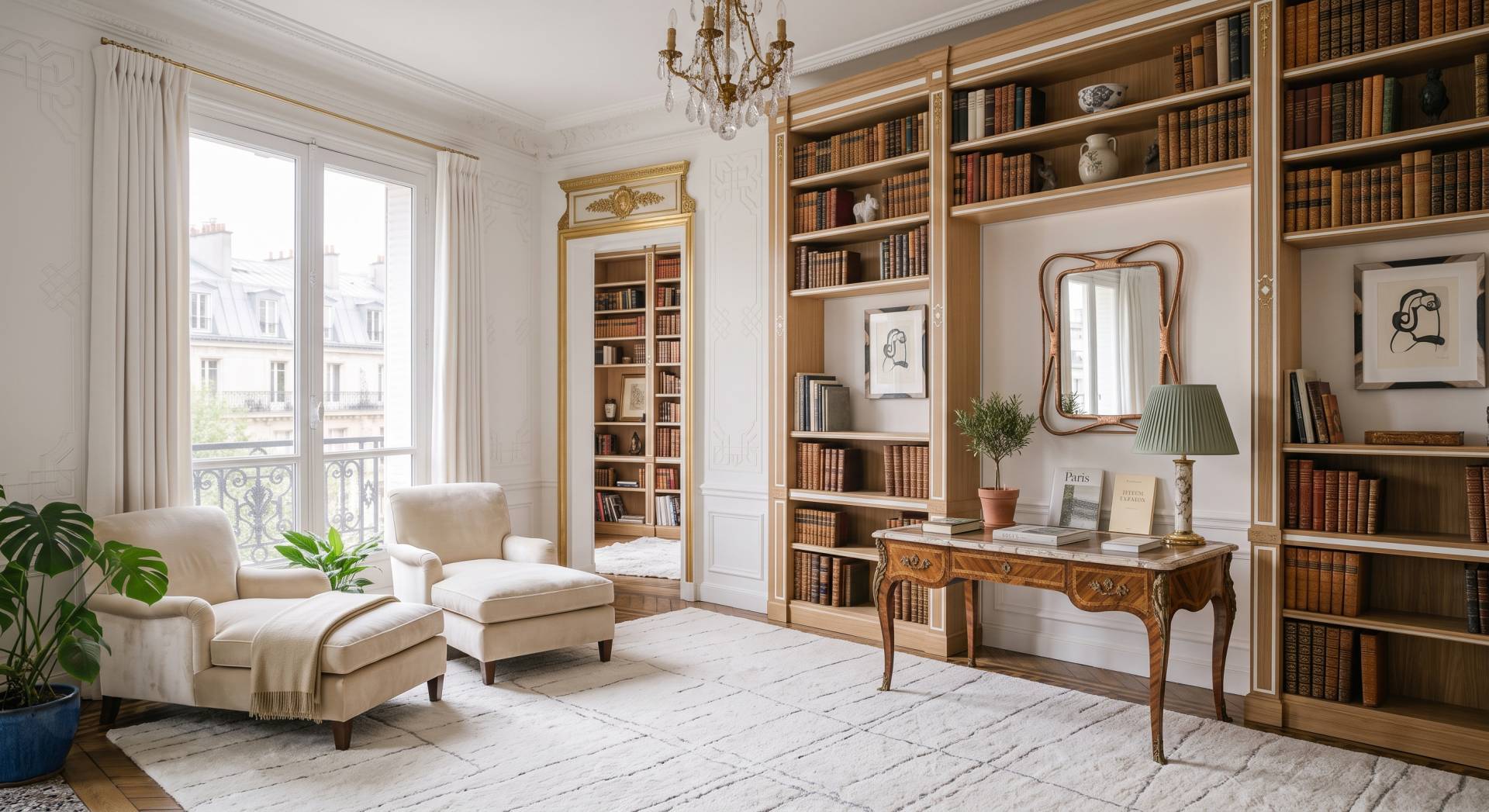
France’s luxury real estate market represented nearly €40 billion in transactions in 2025. Paris is no longer the only major destination, but it remains strategically important for rare properties, expatriates and international buyers.
France’s luxury real estate market continues to represent a significant share of the country’s property sector. According to a Belles Demeures study reported by Challenges, it accounted for €39.3 billion in transactions in 2025. This segment reportedly represented only around 5% of transactions by volume, but 17% of the French property market by value.
This figure is striking, but it should be interpreted carefully. It does not mean that every expensive property sells easily. Rather, it shows that capital remains concentrated on the strongest assets: properties combining location, rarity, quality of use, architecture, natural light, outdoor space, renovation quality, comfort and long-term wealth preservation.
Since 2020, the luxury market has become more geographically diversified. Wealthy buyers increasingly arbitrate between Paris, the French Riviera, the Atlantic coast, certain Alpine resorts and high-end residential markets outside major cities. The search for more space, nature and quality of life has strengthened the appeal of coastal locations, high-quality second homes and family properties offering a more comfortable lifestyle.
Paris has not lost its status as a major property market. The capital is simply no longer alone. Fairway Luxury Real Estate, a specialist in high-end real estate in Paris, particularly in the 8th, 16th and 17th arrondissements, observes this changing landscape through its discussions with sellers, expatriates, Parisian families and international buyers.
One of the most widely discussed findings of the study concerns the changing geography of the luxury market. According to figures reported by Challenges, Paris now represents around 14% of France’s luxury real estate market, compared with 15% for the French Riviera and 15% for the Atlantic coast.
This development should not be interpreted as a decline in the Parisian market. Instead, it reflects the expansion of the luxury segment into other regions. Renovated villas, houses with views, properties close to the ocean and family homes with gardens or swimming pools appeal to a demand that has strengthened since the pandemic.
High-net-worth buyers no longer make decisions based solely on a Parisian address. They compare lifestyles and uses. A family apartment in the 17th arrondissement, a pied-à-terre in the 8th, a house in the Basque Country, a villa on the French Riviera or an apartment in Lisbon can now be part of the same wealth and lifestyle strategy.
For a Parisian seller, this changes the way a property must be presented. The address remains essential, but it is not always sufficient. Buyers compare quality of life, everyday practicality, ease of maintenance, the possibility of working from home, thermal comfort, outdoor space and the property’s future liquidity.
Paris nevertheless retains powerful advantages: market depth, international visibility, land scarcity, long-term wealth preservation, cultural density, schools, transport, high-quality historic buildings and strong appeal among French expatriates and international buyers.
Paris remains one of the world’s most recognisable markets for heritage and prime residential real estate. A well-located apartment in a Haussmannian building, with high ceilings, balanced proportions, a desirable floor, good exposure, outdoor space or an open view, continues to benefit from a depth of demand that few markets can match.
In the 8th, 16th and 17th arrondissements, certain areas continue to benefit from well-established demand. Around Parc Monceau, Les Ternes, Place de l’Étoile, Plaine Monceau, Victor Hugo, Passy, Auteuil and Gros-Caillou, quality family properties remain sought after when the asking price is consistent with both the strengths and weaknesses of the property.
International demand also plays an important role. Challenges cites Sophie Berg, Deputy Managing Director of Daniel Féau, who stated that for transactions above €4 million, 35% were reportedly completed by foreign buyers, including 44% by Americans.
This is particularly important for Paris. International buyers often look for properties that are immediately easy to understand: a prestigious address, a quality building, a clear layout, a carefully executed renovation, a high floor, peace and quiet, natural light and a strong level of comfort.
French expatriates often have similar expectations, with an even stronger practical dimension. After several years in London, New York, Geneva, Brussels, Singapore or Lisbon, they frequently return with higher expectations regarding thermal comfort, air conditioning, kitchens, bathrooms, storage, window quality, heating and energy performance.
The €39.3 billion figure should not be used automatically to justify an overly ambitious asking price. The luxury market remains active, but it is increasingly selective.
The Notaires du Grand Paris described a measured recovery in the Paris region in 2025, with nearly 125,000 transactions in Île-de-France, representing a 13% increase over one year, although activity remained historically low. In the fourth quarter of 2025, sales increased by 11% year-on-year across Île-de-France, including an 8% increase for apartments in Paris.
This distinction is important. The market is recovering, but it has not returned to the conditions of the ultra-low interest rate period. Apartment prices in Paris reached approximately €9,600 per square metre in the fourth quarter of 2025, up 1.4% year-on-year according to the Notaires du Grand Paris.
On the ground, buyers are asking increasingly detailed questions. They look at the floor level, exposure, overlooking, noise, building quality, lift access, the condition of common areas, service charges, energy performance, the possibility of installing air conditioning, the layout, ceiling height, cellar space, bicycle storage, heating, windows and ease of future resale.
At Fairway Luxury Real Estate, we observe that high-end buyers do not necessarily reject properties with flaws. However, they expect those flaws to be reflected in the price. A first-floor apartment, significant overlooking, extensive renovation work, the absence of outdoor space or the impossibility of installing air conditioning do not always prevent a sale. But these issues quickly become part of the discussion and often structure the subsequent negotiation.
In the Paris luxury market, the initial launch strategy is critical. A property introduced at too high a price can quickly be identified by active buyers. Once that perception is established, negotiations can become more difficult, even after a price reduction. The high-end market does not respond well to commercial imprecision.
In Paris, the high-end market remains active, but buyers are more precise than they were a few years ago. They are not simply visiting an address or considering a surface area. They assess how the property works in everyday life, whether it fits their lifestyle and how easily it could be resold in the future.
During buyer qualification, several criteria regularly emerge: existing air conditioning or the possibility of installing it, outdoor space, energy performance, peace and quiet, natural light, floor level, lift access, a cellar, bicycle storage and service charges. These criteria do not replace the importance of location, but they can influence the final decision.
For family apartments, the layout remains central. A 120-square-metre apartment with three genuine bedrooms, a well-proportioned living area and limited wasted space may be more liquid than a larger property that is difficult to organise. Families also consider school catchment areas, access to transport, building security, storage and the possibility of creating a genuine primary suite.
For pied-à-terres, particularly among international buyers and expatriates, the logic is different. They often favour a smaller apartment that is well renovated, comfortable and easy to use immediately. In this category, air conditioning, individual heating, a fitted kitchen, high-quality bathrooms and ease of management can be particularly important.
Flaws do not necessarily prevent a sale. However, they must be addressed from the valuation stage. A low floor, overlooking, extensive renovation work, the absence of outdoor space or average energy performance should all be incorporated into the pricing strategy. In the high-end market, buyers are prepared to pay a premium for a rare property, but they negotiate strongly when they believe the price does not reflect real constraints.
Luxury demand has evolved. Traditional criteria remain essential: location, building quality, floor level, surface area, layout, natural light, peace and quiet and architectural quality. But other factors now play a more significant role during viewings and buyer qualification.
Air conditioning is now frequently requested, particularly by international buyers and expatriates. It is not always technically or legally possible, but the question arises regularly. Before stating that an apartment can be air-conditioned, it is important to verify the technical feasibility, the building regulations, any approval required from the co-owners and potential planning constraints, especially where an external unit may be visible.
Outdoor space, even when relatively modest, is also increasingly valued. A usable balcony, terrace, private garden or open view can significantly change the perception of a property. However, the added value depends on how the space can actually be used: its depth, exposure, noise levels, overlooking, the possibility of dining outside, its connection with the living areas and the quality of the surrounding environment.
Energy performance also plays a greater role. In the luxury market, buyers do not necessarily focus only on the energy rating itself, but they want to understand thermal comfort, the heating system, window quality, potential insulation improvements, service charges and future renovation requirements. An average rating may be accepted when the location and property are rare, but it can become an important negotiating point.
Bicycle storage, a dry and healthy cellar, building security, the quality of common areas and the presence of a caretaker or lift are also examined more closely. These features may appear secondary, but they contribute to quality of use, particularly for families and international buyers.
Haussmannian family apartments remain highly sought after when they combine several qualities: three bedrooms or more, a double reception room, a rational layout, high ceilings, preserved period features, a lift, a cellar and a family-oriented location.
In the 17th arrondissement, family apartments around Plaine Monceau, Villiers, Les Ternes, Wagram and Batignolles remain sought after when they offer a rational layout, three bedrooms, good natural light and a location suited to family life. A lower floor or overlooking may be accepted, but only if the price reflects those limitations.
In the 8th arrondissement, buyers are often particularly attentive to the property’s heritage dimension: proximity to Parc Monceau, Place de l’Étoile, Saint-Philippe-du-Roule, Faubourg Saint-Honoré or the major business districts. Renovated pied-à-terres, elegant historic buildings and reception apartments continue to benefit from strong demand when presented carefully.
In the 16th arrondissement, natural light, open views, generous volumes, prestigious buildings and layout quality remain decisive. Buyers may accept larger surfaces and significant renovation budgets, but they expect a clear understanding of the property’s potential, renovation costs and post-renovation value.
Properties with outdoor space benefit from a real advantage, provided that the space is genuinely usable. A purely decorative balcony does not have the same value as one large enough to accommodate a table. A terrace heavily exposed to noise or overlooking does not command the same premium as a quiet, well-oriented terrace directly connected to the living areas.
Properties requiring renovation can still sell well, but they must be presented rigorously. Buyers want to understand the renovation budget, technical constraints, redevelopment possibilities and whether the asking price remains coherent after the work is completed. In the high-end market, renovation is no longer simply about aesthetics. It also involves thermal comfort, energy performance, air conditioning, windows, electricity, plumbing, kitchens and bathrooms.
For a high-end property, the price per square metre remains a useful reference, but it is not sufficient. Two apartments of the same size, in the same arrondissement, can have very different values depending on their floor level, exposure, layout, condition, building, view, quietness and rarity.
A 120-square-metre apartment on the fourth floor with a lift, balcony, natural light and a family-friendly layout cannot be compared mechanically with an apartment of the same size on the first floor, facing the street, with significant overlooking and extensive renovation work. The difference is not simply marginal. It can fundamentally change the depth of buyer demand.
At Fairway Luxury Real Estate, a property valuation combines several levels of analysis: notarised transaction references, properties currently competing on the market, market history, the depth of demand, technical limitations, renovation potential, quality of use and commercial strategy. This approach helps establish a price that can be credibly defended to buyers.
This exercise is particularly important in the high-end market because significant value differences can exist within only a few streets. A property close to Parc Monceau is not assessed in the same way as one located further away. An apartment on Rue de Courcelles, Boulevard Malesherbes, Avenue de Wagram, Rue de Prony, Avenue Victor Hugo or in the Passy-Auteuil area cannot be analysed solely at arrondissement level. Floor level, natural light, quietness, building quality and layout remain decisive.
In the high-end market, excessive commercial exposure can damage perceived value. A property listed by several agencies, sometimes at different prices, with inconsistent photography, contradictory descriptions or inaccurate information, can quickly create an impression of overexposure.
Serious buyers monitor property portals, compare listings and quickly identify inconsistencies. When a property appears multiple times with different presentations, it can lose desirability. This perception is particularly damaging for premium properties, where perceived rarity matters almost as much as actual rarity.
An exclusive listing agreement makes it possible to control the presentation, timing, information provided to buyers, buyer qualification and negotiation strategy. It also helps maintain a coherent approach: one price, one narrative, one property file and one strategy.
For a seller, exclusivity only makes sense when it is supported by genuine work: a well-argued valuation, preparation of the property file, professional photography, a precise listing, appropriate distribution, careful lead qualification, structured viewing feedback and adjustments to the strategy if market response is weaker than expected.
The luxury market remains deep, but it rewards precision. Buyers exist, including at high price points, but they make decisions quickly when a property appears overpriced or when a significant weakness has not been reflected in the asking price.
Before selling, an owner should analyse five key areas: the genuinely defensible price, competing properties, notarised transaction references, the weaknesses likely to affect negotiations and the profiles of the most probable buyers.
An apartment with a strong address, a desirable floor, natural light, a coherent layout, outdoor space or a high-quality renovation can still generate rapid decisions. Conversely, an overly ambitious property, even in a sought-after location, can lose its commercial advantage within the first few weeks on the market.
In Paris, prestige cannot simply be claimed. It must be demonstrated through the location, building, layout, quality of use, presentation and accuracy of the asking price.
Is the luxury real estate market in Paris still dynamic?
Yes, but it is more selective. Rare, well-located, bright, well-designed and correctly priced properties continue to attract serious buyers. Properties with significant flaws or overly ambitious asking prices face stronger negotiation.
Does Paris remain a safe haven for international buyers?
Paris continues to have strong international appeal, particularly among American and European buyers as well as French expatriates. Properties located in established heritage districts, with a recognisable address and strong quality of use, remain highly sought after.
Which criteria matter most when selling a high-end apartment in Paris?
The criteria most frequently considered include the address, floor level, natural light, quietness, outdoor space, renovation quality, existing or possible air conditioning, energy performance, building quality, lift access, cellar space, service charges and the coherence of the layout.
Can an apartment requiring renovation still sell well in the luxury market?
Yes, but the asking price must reflect the real cost of the work and any technical constraints. Buyers are willing to undertake a renovation project when the location, layout, volumes or view justify the financial investment.
Why request a property valuation before selling a luxury home?
A valuation makes it possible to analyse notarised transaction references, competing properties, the property’s rarity, its weaknesses, its potential and actual buyer demand. In the high-end market, a pricing mistake at launch can significantly slow down the sale.
Why is an exclusive listing agreement often relevant for a high-end property?
An exclusive listing agreement makes it possible to control the property’s presentation, buyer qualification, information provided and negotiation strategy. In a selective market, this consistency can reinforce the perceived value of the property.
Does Fairway Luxury Real Estate assist expatriate sellers?
Yes. Fairway Luxury Real Estate assists property owners living abroad with the sale of high-end properties in Paris, offering adapted communication, rigorous buyer qualification and structured support through to completion.
Key Points to Remember
"France’s luxury real estate market is becoming more geographically diversified, but Paris retains strong buyer depth and long-term value for rare properties. In the high-end segment, success increasingly depends not only on the address, but also on quality of use, presentation and a price that accurately reflects the property."
 | Article Author Hugues de Poulpiquet Fairway Luxury Real Estate · Real Estate Market With a legal background and as the founder of Fairway Luxury Real Estate, Hugues de Poulpiquet writes Fairway's market analyses covering Paris real estate, selling strategies and the valuation of high-end residential properties. |
Fairway Luxury Real Estate
This site is protected by reCAPTCHA and the Google Privacy Policy and Terms of Service apply.