en
en
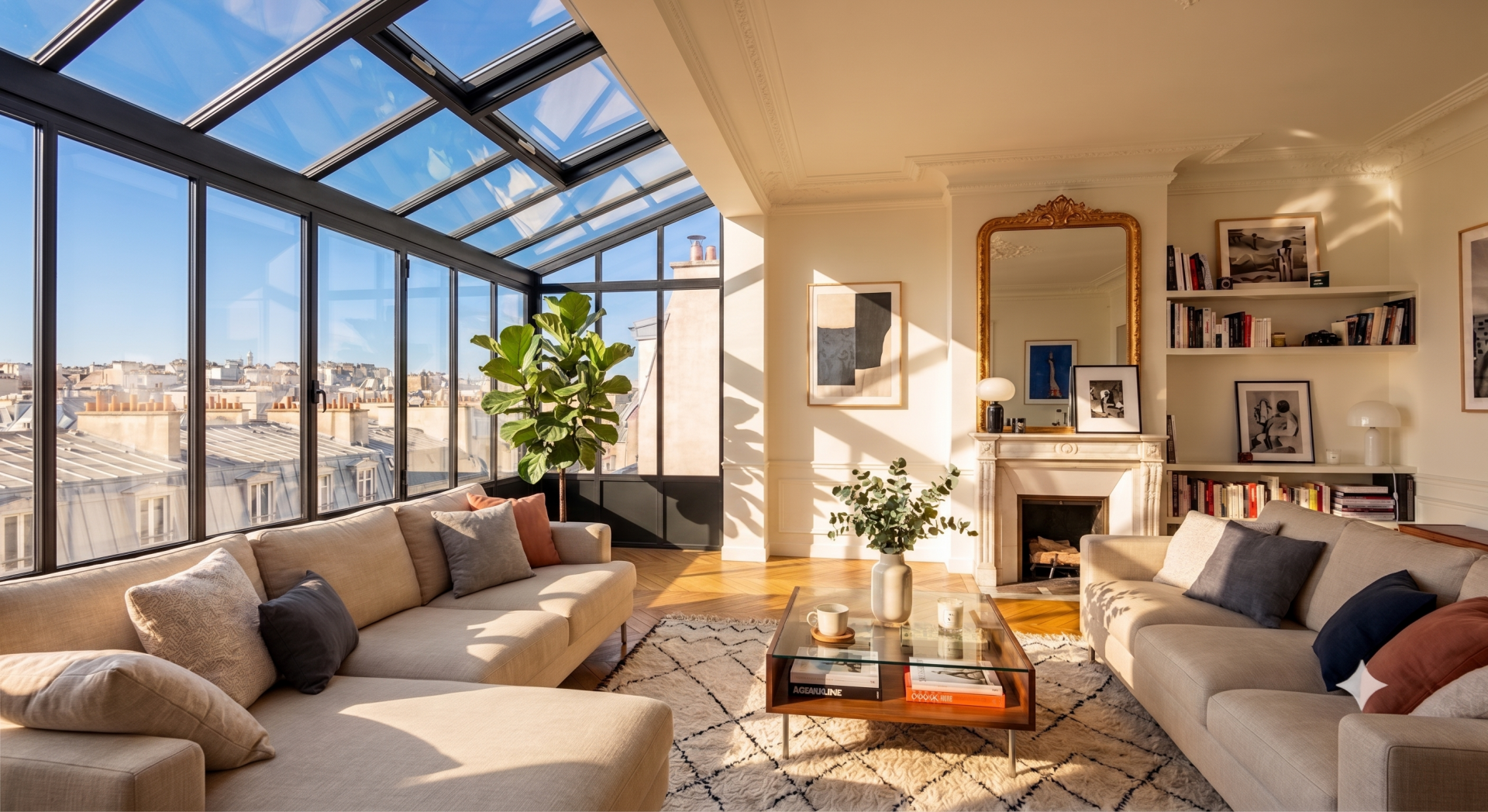
The new criteria that make the difference on the Paris market
In Paris, the fundamentals of high-end real estate remain the same: the address, the floor level, the elevator, the light, the layout, the quality of the building, the charm of period features and the rarity of the property. An apartment located near Parc Monceau, Ternes, Plaine Monceau, Saint-Georges, Passy or the major avenues of the 8th arrondissement is not assessed like a standard property.
But the market is evolving. Buyers, whether French or foreign, no longer look only at the classic codes of the beautiful Parisian apartment. They are giving growing importance to more concrete criteria: air conditioning, balcony or terrace, bicycle storage room, ceiling height, type of heating, energy performance diagnosis.
These criteria are no longer simple comfort details. They influence a property’s desirability, its liquidity, its level of negotiation and sometimes its resale value. For a buyer, they make it possible to buy more intelligently. For a seller, they make it possible to better position an apartment on the market.
Fairway Luxury Real Estate, specialist in high-end real estate in Paris, observes this evolution in searches for family apartments, pieds-à-terre and properties intended for an international clientele.
Before analyzing the new criteria, it is important to recall a simple reality: in Paris, no comfort feature replaces a good address.
An apartment with air conditioning, a balcony and a good DPE will remain difficult to defend at a very high price if the address is secondary, if the building is mediocre, if the layout is not very functional or if the light is insufficient.
The historical criteria therefore remain decisive:
But at a comparable level, the new criteria can tip a buyer’s decision. They can also allow a seller to better defend their price, or conversely explain why a property generates fewer offers despite a beautiful address.
Air conditioning is probably one of the criteria whose status has changed the most in Paris.
For a long time, it was perceived as a secondary feature, sometimes incompatible with the image of the old Parisian apartment. Today, it becomes a recurring question from the very first exchanges, especially among foreign buyers, Anglo-Saxon, American, Middle Eastern or accustomed to international real estate standards.
For these clients, air conditioning is not always a luxury. It is part of the level of comfort expected in a high-end property.
In Paris, this demand is also explained by climate change. The City of Paris has adopted its Climate Plan 2024-2030, which explicitly integrates the challenges of adapting the city to climate change and heat episodes. (Paris)
For a buyer, the right question is therefore not only: “Is the apartment air-conditioned?” It is also necessary to check:
For a seller, existing air conditioning or a clear possibility of installation can become a commercial argument. Conversely, a technical impossibility or a co-ownership ban must be identified from the outset, because it can become a point of negotiation.
In Paris, usable outdoor space is rare. This rarity reinforces its value.
A balcony, a terrace, a loggia, a courtyard with exclusive use or even a small outdoor space accessible from the living room can modify the perception of an apartment. In recent years, buyers have increasingly been looking for properties that offer breathing space, even modest.
In the high-end market, outdoor space is particularly valued when it combines several qualities:
A shallow continuous balcony does not have the same value as a truly usable same-level terrace. But even a small outdoor space can create a strong preference between 2 apartments close in surface area, address and budget.
For a seller, the outdoor space must therefore be presented precisely: surface area, orientation, depth, possible use, view, exposure and access. A poorly described outdoor space is often undervalued.
The bicycle storage room is not always the most prestigious criterion. Yet it is becoming increasingly important.
In Paris, mobility habits are evolving. Many buyers use a classic bicycle, an electric bicycle or a cargo bike. For a family, a clean, secure and easily accessible bicycle storage room can become a real criterion of everyday comfort.
In older buildings, this point is often problematic. Cellars are sometimes difficult to access, service staircases are narrow, common areas do not always allow storage, and some co-ownerships strictly regulate the use of common areas.
For a buyer, it is therefore necessary to check:
For a seller, this criterion does not by itself justify a strong premium, but it improves the perceived use of the property. In certain family segments, it can even be one of the elements that reassure the buyer.
In old Parisian properties, ceiling height is a marker of standing. But precision is needed.
A ceiling height of 2.75 meters or 2.80 meters can be pleasant. From 3 meters, the effect truly changes. The volume becomes more elegant, light circulates better, period features gain more importance, and the apartment gives a more stately impression.
This is particularly true in beautiful Haussmannian or post-Haussmannian buildings in the 8th, 16th, 17th or 9th arrondissement.
For a buyer, ceiling height must be analyzed with the rest of the property. A beautiful height does not compensate for a poor layout, weak light or a secondary address. But at equal quality, it clearly reinforces desirability.
For a seller, a ceiling height equal to or greater than 3 meters must be clearly indicated in the listing and in the valuation opinion. It is an objective element, immediately understandable by both French and foreign buyers.
Electric heating has long been perceived as a weak point, particularly because of its possible impact on energy consumption and the DPE.
Yet, in some cases, particularly for pieds-à-terre, it may be better accepted than collective heating. A buyer who uses their apartment a few days per month may prefer an individual, controllable, simple system with no dependence on a collective boiler.
The subject must however be treated with caution. Electric heating is not automatically an advantage. It depends on:
This point is all the more important as the DPE calculation method changes on January 1st 2026. The electricity conversion coefficient is expected to move from 2.3 to 1.9, which may improve the energy rating of certain homes heated with electricity. DPEs issued before 2026 will remain valid, but may be updated free of charge without a new visit from the diagnostician, according to information published by the Ministry of the Economy.
For a seller, this means that electric heating should no longer be analyzed automatically or caricaturally. It must be linked to the likely use of the property, the DPE and the profile of the targeted buyers.
The energy performance diagnosis has become a central subject in residential real estate.
Since January 1st 2025, homes rated G can no longer be rented out under the new rules on energy decency. The schedule then provides for the rental ban of homes rated F from 2028, then E from 2034.
Even when the buyer purchases to live there, the DPE now influences the decision. A poor DPE can raise several questions:
In the high-end market, a DPE E, F or G does not always block a sale, especially when the address, the view or the character of the property are exceptional. But it rarely becomes neutral.
Conversely, a DPE D or better reassures. It is not enough to create value, but it reduces perceived risk. For foreign clients, who sometimes discover the French regulatory framework at the time of purchase, a poor rating can be interpreted as a warning signal.
For a seller, the DPE must therefore be integrated very early into the pricing strategy. A poorly rated apartment can remain attractive, but it must be explained, contextualized and sometimes adjusted in its positioning.
To buy a high-end apartment in Paris, it is no longer enough to check the surface area, the address and the number of bedrooms.
From the first visits, a buyer must ask very concrete questions:
These questions are particularly important for foreign buyers, expatriates returning to Paris and buyers of pieds-à-terre. They make it possible to compare properties beyond photographs and better anticipate the value of use.
A beautiful apartment can appeal during a visit, but present significant limitations if air conditioning is impossible, if the DPE is degraded, if charges are high or if the building offers no storage solution.
To sell a high-end apartment in Paris, certain criteria can strengthen the perceived value of the property.
The most important are:
These criteria do not work in isolation. They combine.
An apartment located at an excellent address but without light, without outdoor space, with a poor DPE and without an elevator will have to be positioned with caution. Conversely, an apartment combining address, floor level, elevator, light, balcony, ceiling height and good DPE can justify a more ambitious pricing strategy.
The challenge for the seller is therefore not only to list the qualities of the property. It is necessary to understand which criteria truly create value in the eyes of today’s buyers.
| Criterion | Importance for the buyer | Impact for the seller |
|---|---|---|
| Air conditioning | Summer comfort, strong expectation from foreign buyers, premium use | Strong commercial argument if existing or authorizable |
| Outdoor space | Breathing space, daily use, Parisian rarity | Improves desirability, especially with a view or high floor |
| Bicycle storage room | Family and urban practicality | Reassurance criterion, especially in older buildings |
| Ceiling height from 3 meters | Volume, elegance, standing | Objective element of high-end differentiation |
| Electric heating | Flexibility for pieds-à-terre, individual management | To be defended according to the DPE, use and equipment |
| DPE D or better | Less perceived risk, better resale, better readability | Better liquidity, often more limited negotiation |
| Elevator | Essential criterion on a high floor | Major impact on price and number of buyers |
| Light | Comfort, immediate perception of the property | Central criterion in valuation |
| Layout | Daily use, flow, number of bedrooms | Determines the breadth of the buyer target |
For a high-end real estate agency, buyer qualification can no longer be limited to budget, sector and surface area.
From the first contact, it is necessary to understand the truly blocking criteria:
This qualification makes it possible to avoid unnecessary visits, better guide searches and present sellers with a more precise analysis of demand.
It also makes it possible to better defend a mandate. A seller understands the pricing strategy more easily when it is explained that their apartment does, or does not, meet the criteria currently sought by buyers.
The main criteria remain the address, floor level, elevator, light, layout and quality of the building. But air conditioning, outdoor space, the DPE, bicycle storage room, type of heating and ceiling height are taking on growing importance, especially for foreign buyers and pieds-à-terre.
Air conditioning can strengthen the attractiveness of a high-end apartment, especially among an international clientele. It does not replace the fundamentals of the property, but it can facilitate the sale when it is well integrated, authorized by the co-ownership and compatible with the standing of the building.
Yes, when it is a truly usable outdoor space. A balcony, terrace or loggia can improve the perception of the property, especially on a high floor, with good exposure or an open view. The impact however depends on surface area, depth, quietness and possible use.
Yes. A poor DPE can lead to questions about works, charges, thermal comfort, resale and rental. A DPE D or better reassures buyers more, even in the high-end market.
From 3 meters, ceiling height becomes a true marker of standing. It improves the perception of volume, highlights period features and reinforces the general elegance of an apartment.
Not always. For a large family apartment occupied all year round, it can raise questions of consumption and DPE. For a pied-à-terre, it can on the contrary be appreciated for its simplicity, individualization and ease of control. The analysis depends on the property, its use and its energy performance.
To buy a pied-à-terre in Paris, it is necessary to check the address, building security, elevator, charges, heating, air conditioning, DPE, ease of maintenance and proximity to transport. Individual heating and air conditioning can be particularly sought after for this type of use.
The most valuable criteria are a good address, a high floor with elevator, beautiful light, an efficient layout, significant ceiling height, usable outdoor space, a reassuring DPE, existing or authorizable air conditioning and a well-maintained co-ownership.
The Paris high-end real estate market is becoming more selective. Buyers continue to look for beautiful addresses, beautiful buildings and apartments with character, but they now give more importance to comfort of use, energy performance and the property’s ability to remain desirable in the years to come.
For a buyer, these criteria make it possible to buy with more discernment. For a seller, they make it possible to better understand the real strengths of their apartment and the possible points of negotiation.
At Fairway Luxury Real Estate, we integrate these criteria from the analysis of a property, in valuation opinions, the commercialization strategy and buyer qualification. It is this precise reading of the market that makes it possible to defend a credible price, avoid approximations and build a more effective sale.
Reading the Paris market
"It is this precise reading of the market that makes it possible to defend a credible price, avoid approximations and build a more effective sale."
This site is protected by reCAPTCHA and the Google Privacy Policy and Terms of Service apply.