
en
en
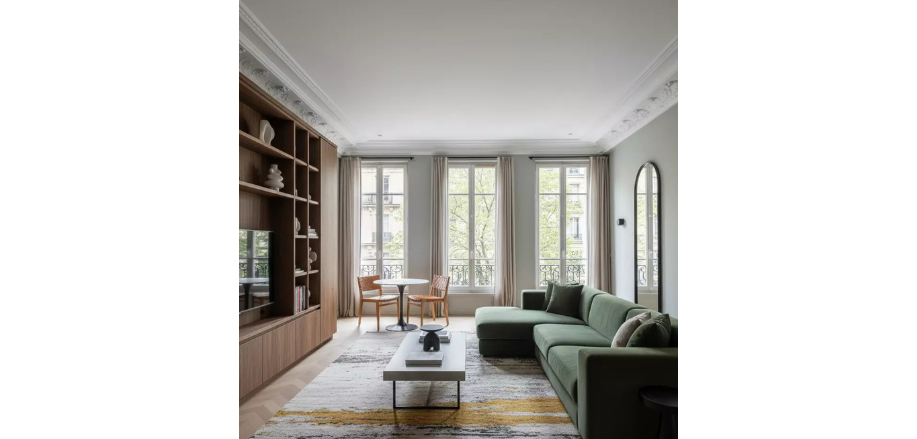
Preparing a return to France, acquiring a pied-à-terre or making a wealth investment by understanding the real stakes of the Paris market.
For many French people living abroad, buying an apartment in Paris remains a natural project: preparing a return to France, acquiring a pied-à-terre or making a wealth investment.
But buying property in Paris from abroad is more complex than it seems.
The Paris market is one of the most segmented and technical in Europe: two apartments located a few hundred metres apart can present significant differences in price, liquidity and wealth potential.
At Fairway Luxury Real Estate, we regularly assist French and international expatriates with their remote acquisitions in Paris, sometimes several years before their actual return.
Here are the 5 most common mistakes expatriates make when buying an apartment in Paris.
Many expatriates start studying the Paris real estate market a few weeks before returning to France.
They then discover:
We recommend observing the market 6 to 9 months before the purchase project.
This phase makes it possible:
This prior observation is essential in order to buy with discernment.
Seen from abroad, Paris may seem homogeneous.
In reality, it is an extremely fragmented market.
Several factors strongly influence the value of a property:
Two apartments located 400 metres apart can present:
For a successful purchase, it is essential to analyse the sales completed in the street or building over the last 24 months.
Expatriates are often subject to strong constraints:
This pressure can lead to buying too quickly.
We often observe buyers focusing on a very restricted area, sometimes linked only to a school, and accepting major compromises on:
However, a good address does not always compensate for a bad layout.
For a property purchase to remain relevant over time, it is essential to distinguish:
A property purchase must always be considered with future resale in mind.
A property that is easy to resell generally has several characteristics:
A low price per m² does not necessarily mean that you are making a good deal.
Conversely, paying more for a property that brings together the most sought-after criteria may offer better wealth security at the time of resale.
The energy performance diagnosis has become a central criterion of the real estate market.
It directly influences:
A home rated F or G is now considered a constrained asset, likely to be affected by:
Since January 1, 2026, the electricity conversion coefficient has been reduced from 2.3 to 1.9.
Consequence: some electrically heated homes can gain one energy class, for example moving from F to E or from E to D.
A free update certificate can be obtained from the number of the existing DPE.
Fairway Luxury Real Estate regularly supports demanding international real estate projects.
Several recent transactions illustrate this positioning:
150 m² ground-floor garden-level apartment sold to an executive listed among the 500 largest fortunes in France.
155 m² apartment acquired by an industrial director of a CAC 40 company.
170 m² apartment bought by an entrepreneur expatriated in Madagascar.
These transactions often involve:
The expatriates who succeed best with their acquisition in Paris are those who:
In Paris, the quality of a real estate project is not judged on the day of signing, but by the property’s ability to remain desirable over time.
Fairway Luxury Real Estate supports international sellers and buyers in their real estate projects in Paris.
Can you buy an apartment in Paris while being an expatriate?
Yes. A non-resident can freely buy property in France. The transaction can be carried out remotely thanks to a notarial power of attorney.
Can you sign a deed of sale from abroad?
Yes. French notaries now allow electronic signing or signing by power of attorney.
Do French banks lend to expatriates?
Yes, some banks finance non-residents, but the conditions are often stricter.
Which Paris districts are sought after by expatriates?
Expatriates often favour:
What budget is needed to buy an apartment in Paris?
Depending on the district and the quality of the building, prices generally vary between €10,000 and €20,000 / m², with wider gaps for exceptional properties.

This site is protected by reCAPTCHA and the Google Privacy Policy and Terms of Service apply.